
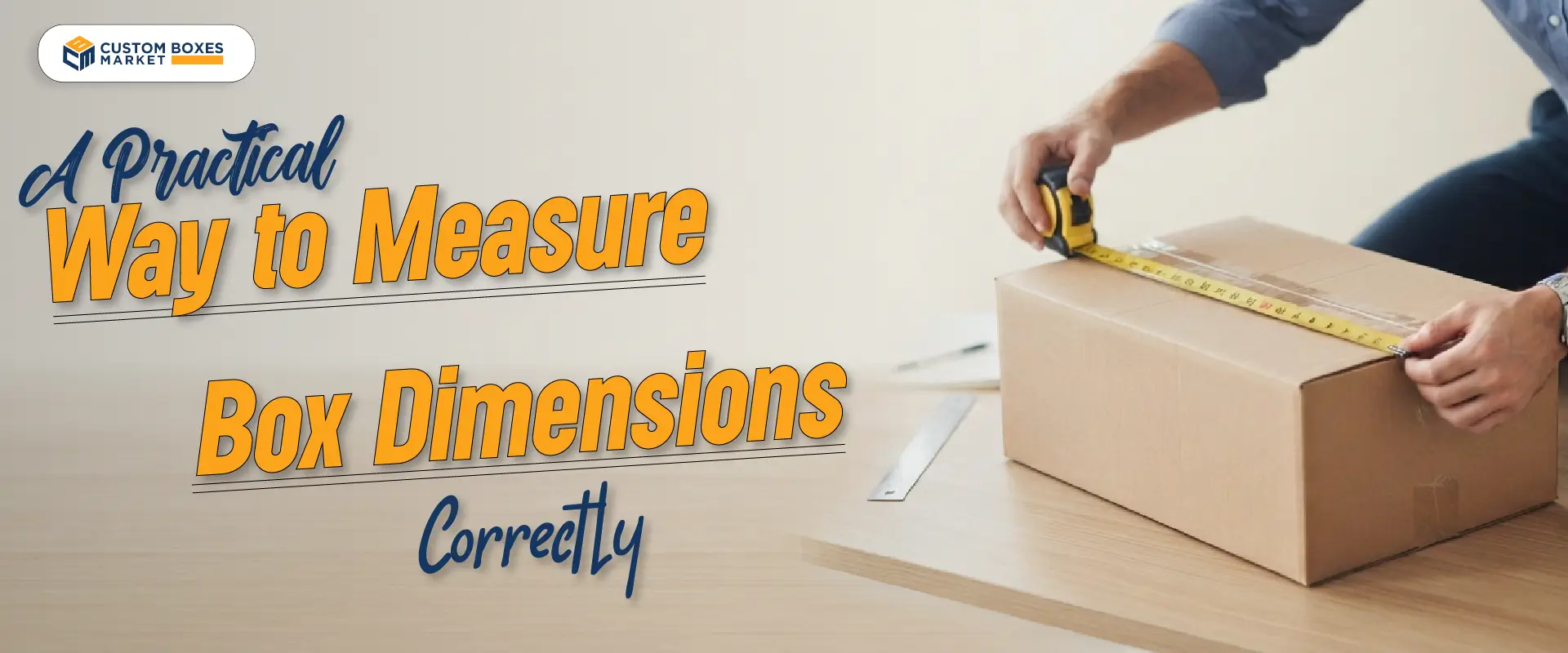
A Practical Way to Measure Box Dimensions Correctly
September 25, 2026 Packaging Design
Accurate measurements give the right box size. If you select a small box, you may end up damaging the product. On the other hand, an unreasonably large box can cause product movement during shipping that may lead to damage. When you fully comprehend box dimensions, you will be able to select the right box for you without spending extra cost. Whether you are selecting a new box style or you have to make changes to the previous ones, there are three things that you have to keep in mind:
- Length
- Width
- Height
With these dimensions, you will be able to understand the usable space of the box and can order boxes with the same dimensions. In this blog, we will understand a few things, namely:
- How to measure a box
- Where each measurement starts and ends
- How to record dimensions
- How to avoid common measurement mistakes
What Do Box Dimensions Mean?
The measurements of a box follow a standard sequence:
Length × Width × Height (L × W × H)
- Length runs from one end to the other
- Width runs from side to side
- Height runs from bottom to top
Length is the longest side of the box. Width is the shorter side of the box across the opening or the base. Lastly, the height of the box is the distance from the bottom to the top. For example, a carton measuring:
12 × 8 × 4 inches
has:
- 12-inch length
- 8-inch width
- 4-inch height
The order matters a lot. At the time of measuring packaging, this sequence of L × W × H gives a clear structural reference of the packaging. Clearly inform the box manufacturers whether the measurements represent inner dimensions or outside dimensions of the product boxes. This distinction becomes important when you are selecting thick box materials such as corrugated and rigid board.
Why Accurate Measurements Matter
When a brand does not measure the dimensions of a box accurately. It ends up facing practical problems. If a box is too large or too small, you will face:
- The product may fit poorly
- Requires excessive filler
- Becomes difficult to insert and remove
So it is mandatory to carefully measure the dimensions of a package. You will be able to get multiple benefits, such as:
- Product fit: The package should provide enough internal space without allowing excessive movement.
- Protection: Correct dimensions allow inserts to dividers and cushions to other protective components to fit properly.
- Shipping: Carriers often calculate charges from package size and weight. Oversized packaging can increase dimensional weight.
- Storage: Consistent carton sizes make warehouse stacking and shelf planning easier.
- Material efficiency: A properly sized package can reduce unnecessary board, paper, and filler.
- Custom manufacturing: Packaging suppliers use measurements to develop cutting layouts and dielines. It also enables perfect folding structures and prototypes.
- Bypass Product Delays: With the selection of the right box style, you will not have to face sample errors and product delays.
How to Measure a Box Size
The simplest way to measure dimensions is the use of a rigid ruler or a measuring tape. You can also use calipers for smaller packaging. Make sure that you have placed the box on a flat surface and then identify its three primary dimensions.
How To Measure the Length
The longest side of the box base is the length. Measure it from one inside edge to the opposite edge. If you are measuring rectangular boxes, then length is the larger horizontal measurement of the box. To measure this, you have to keep your ruler straight and should avoid damaged or curved edges. Do not add the flaps of the boxes to the internal measurement of the boxes.
How To Find The Width Of A Box
Width is measured across the shorter edge of the box base. Our measurement should run perpendicular to the length. You can measure an assembled carton from one inside wall to the other inside wall.
How To Measure the Height
The height of the box should be measured vertically from the bottom inside surface to the top inside edge. For instance, the height is the distance between the base and the opening in a folding carton. In rigid and corrugated boxes, height depends on the style of the box. Make sure that you follow the right order of Length × Width × Height to prevent confusion or error.
How to Measure Box Size for Custom Packaging
If you need custom packaging, then the measurement of only the internal size of the box is not necessary. You have to start from the pouch itself. Such as:
- Maximum length
- Maximum width
- Maximum height
After this, consider the packaging structure and additional protective elements added to the packaging. For instance, an electronic packaging box for fragile electronics may need space for the following:
- Foam inserts
- Molded pulp
- Cardboard dividers
- Instruction cards
- Accessories
- Charging cables
- Protective wraps
One thing that is pertinent to motion here is that you do not have to randomly add extra measurement randomly. You must consider:
- Product
- Insert design
- Closure style
- Handling conditions
Your packaging manufacturer will use these measurements and create a box design that will determine an appropriate board grade.
Internal vs External Measurements
At the time of selecting the packaging dimensions, clearly state whether the measurements are for the inside of the box or the outside. Internal dimensions of the box are the usable space that is available for the product. They are particularly useful when:
- Designing product packaging
- Creating inserts
- Checking product fit
- Planning dividers
- Developing retail cartons
The external measurements of the boxes describe the measurements of the overall footprint of an assembled box. This is essential for:
- Shipping calculations
- Pallet planning
- Warehouse storage
- Retail displays
- Transport requirements
The difference between the internal and external dimensions of the boxes depends on the material thickness and box styles. For instance, corrugated boxes have a high difference between the internal and external measurements. This is because of the flute size and the liner paper. Every packaging type has a different measurement method. Such as:
| Packaging Type | Dimension Tip | Style Detail | Internal Space | Production Step |
| Corrugated Boxes | Measure length | Regular slotted | Product capacity | Determine dimensions |
| Rigid Boxes | Account thickness | Separate lid | Usable space | Check clearance |
| Mailer Boxes | Main cavity | Locking tabs | Integrated flaps | Ignore extensions |
| Folding Cartons | Confirm dieline | Flat structure | Physical carton | Manufacturer specs |
| Flexible Bags | Width height | Gusset seal | Flexible packages | Traditional format |
Final Measurement Checklist
Before you send your packaging measurements to a supplier. Make sure that you have the following details:
- Length
- Width
- Height
- Measurement unit
- Internal or external dimensions
- Product orientation
- Required clearance
- Insert requirements
- Closure style
- Material type
Clear specification of the boxes will reduce misunderstandings between the buyer and supplier. You will be able to create a professional impression on the customer and get rid of excessive specifying of materials or packaging fillers. For a quality custom packaging box, you can contact Custom Boxes Market. We will manufacture the box with the perfect specifications and under the supervision of professionals. So contact us today!
Categories
Recent Posts
16 / October , 2026 Custom Packaging
9 / October , 2026 Packaging Design
2 / October , 2026 Custom Packaging
25 / September , 2026 Packaging Design

21 / September , 2026 Custom Packaging

11 / September , 2026 Box Customization
27 / August , 2026 Custom Packaging
13 / August , 2026 Packaging Design
20 / July , 2026 Packaging Design
9 / June , 2026 Custom Packaging


4 / March , 2026 Packaging Design
19 / February , 2026 Box Customization